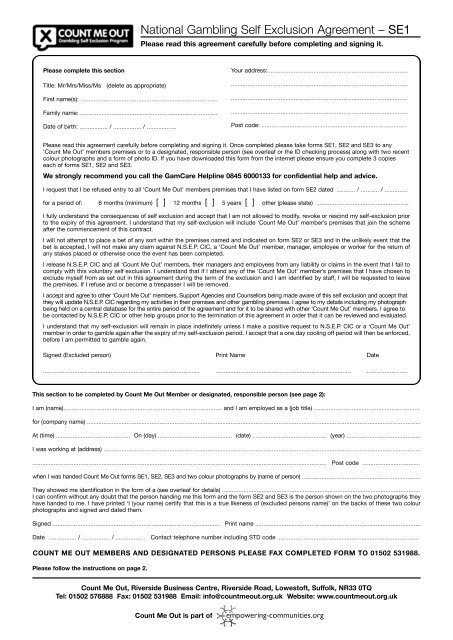
Exploring Casinos Outside National Self-Exclusion Programs
For individuals struggling with gambling addiction, self-exclusion programs provide a necessary measure of protection. However, in many jurisdictions, there are casinos that operate outside the boundaries of these national self-exclusion frameworks. This article aims to delve into the complexities surrounding these casinos, their operations, and the implications they hold for vulnerable individuals. For more information, visit casinos outside national self exclusion https://shellstep.org.uk/.
Understanding Self-Exclusion
Self-exclusion is a crucial tool that allows individuals to voluntarily exclude themselves from gambling venues and online platforms. Most countries have established national schemes to promote responsible gambling, enabling individuals to set boundaries for their gambling activities. These programs can exist in the form of a national registry, where individuals can register to be excluded from all casinos and online gambling websites for a set duration. However, the effectiveness of these programs relies greatly on compliance from operators and the individual’s commitment to abstain from gambling activities.
The Landscape of Casinos Operating Outside Self-Exclusion
When discussing casinos outside of national self-exclusion, it is important to recognize that these establishments may not adhere to the regulations that govern their counterparts. In some cases, they operate in jurisdictions where national self-exclusion programs do not exist or are poorly enforced. This creates a paradox where individuals seeking to avoid gambling can inadvertently find themselves in environments that are not intended to support their recovery.
Reasons Casinos Operate Outside Regulations
Several reasons can contribute to why some casinos operate outside national self-exclusion programs:


- Lack of Enforcement: In some regions, regulatory bodies may lack the power or resources to enforce self-exclusion measures effectively.
- Attraction of Tourists: Certain casinos may cater to tourists or temporary visitors who are not part of local self-exclusion programs.
- Alternative Regulatory Frameworks: Some casinos might function under alternative regulations that provide them a loophole to avoid national self-exclusion.
Implications for Problem Gamblers
The existence of casinos operating outside of national self-exclusion measures can pose significant risks for problem gamblers. Without the protective barriers established by self-exclusion programs, individuals may find it challenging to avoid gambling, leading to increased financial, psychological, and social problems.
Moreover, the lack of oversight can lead to a normalization of gambling behavior, undermining efforts by governmental and non-governmental organizations aimed at promoting responsible gambling practices.
Potential Risks
Engaging with casinos outside the jurisdictional self-exclusion measures can lead to several risks for individuals:
- Increased Exposure: These casinos can expose individuals to gambling environments that are highly stimulating and often designed to encourage prolonged play.
- Financial Consequences: Access to gambling without the structure of self-exclusion can lead to significant financial losses.
- Lack of Support Systems: These casinos may not provide the necessary support systems that are often associated with regulated environments, such as counseling services or responsible gambling programs.
Responsible Gambling Practices
In light of the existence of these casinos, it is vital for individuals to engage in responsible gambling practices. If self-exclusion programs are not available or accessible, players should consider alternative methods to manage their gambling behavior, such as:
- Setting Limits: Establishing personal limits on time and money spent can help maintain control over gambling activities.
- Seeking Support: Individuals struggling with gambling can benefit from support groups or therapy designed to address gambling addiction.
- Educating Oneself: Understanding the odds, risks, and consequences associated with gambling can empower individuals to make informed decisions.
The Role of Technology
The rise of technology has significantly impacted the gambling landscape. Online casinos, in particular, pose unique challenges regarding self-exclusion. While some online platforms may offer self-exclusion tools, others may operate in jurisdictions with minimal regulation. Technology can also be leveraged to create more robust self-exclusion mechanisms, allowing individuals to block access to multiple platforms simultaneously.
The Future of Self-Exclusion
As the gambling industry continues to evolve, there is a pressing need for enhanced collaboration between casinos, regulatory bodies, and mental health organizations. Future self-exclusion programs may benefit from:
- Integrated Approaches: Combining national self-exclusion programs with local initiatives to ensure wider outreach and effectiveness.
- Technological Innovations: Utilizing technology to provide real-time geolocation services that can help enforce self-exclusion in physical casinos.
- Increased Awareness: Promoting understanding and awareness around the intricacies of gambling, the nature of addiction, and available resources.
Final Thoughts
The existence of casinos operating outside of national self-exclusion programs presents a complex challenge for individuals struggling with gambling addiction. As both a societal concern and an individual struggle, addressing these issues sensitively and comprehensively is paramount. By fostering responsible gambling practices, enhancing regulatory frameworks, and integrating technology into self-exclusion processes, society can take meaningful steps to protect vulnerable individuals while promoting a healthier gambling environment for everyone.